How to Build Structured Workouts on Intervals.icu – A Step-By-Step Guide
A practical guide for coaches and athletes who want to turn training into clear, repeatable sessions.
A simple guide for coaches and athletes
Level Up Life × Intervals.icu
Structured workouts transform training from something intuitive into something structured, measurable, and purposeful. Instead of simply riding or running by feel, each session is divided into clear blocks with defined durations and intensities.
This approach is part of my coaching philosophy → The P.E.A.K.™ Method, where every session has a clear objective.
A clear structure helps athletes understand the purpose of the session and execute it consistently. Over time, it also makes training easier to analyze, adjust, and improve.
The workout builder in www.intervals.icu makes this process straightforward once you understand the basic logic. The guide below walks through the simple steps needed to create your first workout.
If you prefer to see the process visually, you can also watch the walkthrough video here:
https://youtube.com/watch?v=idixMs-kPY0
Understanding the basic structure
Most endurance workouts follow the same fundamental pattern:
- Warm-up
- Main set
- Cool-down
Each phase has a defined duration and intensity. The goal is not complexity but clarity, so the athlete always knows what to do during the session.
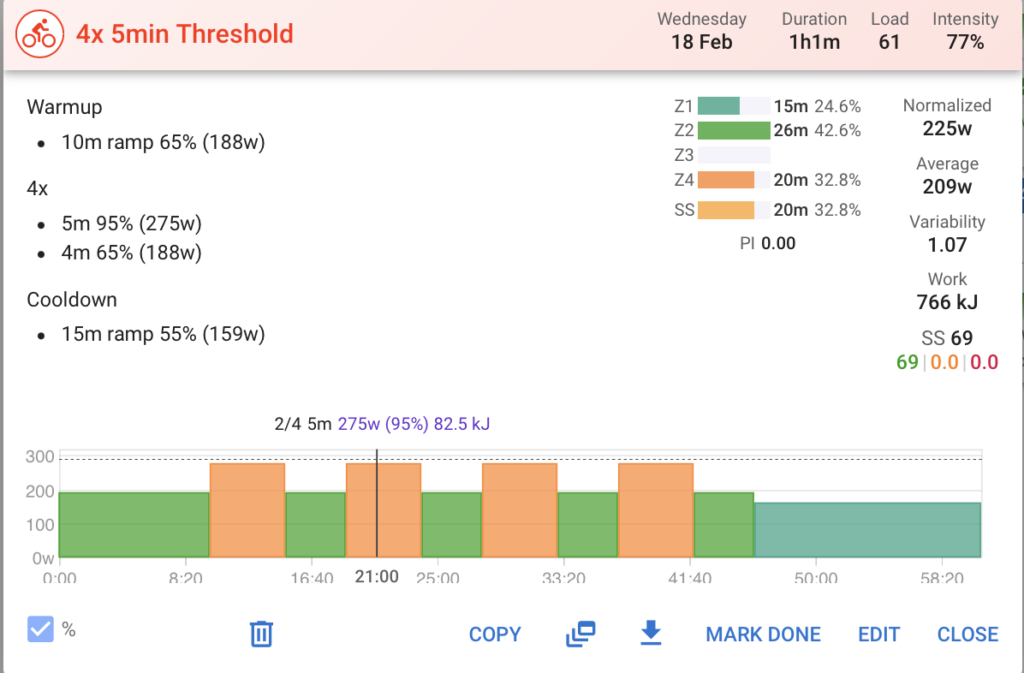
A simple threshold workout built with the workout builder might look like this:
Warm-up
10 minutes 65% FTP
Main set (4 rounds)
5 minutes at 95% FTP
4 minutes recovery at 65% FTP
Cool-down
15 minutes 65% FTP
Total duration: about 60 minutes.
If you want help structuring your training, interpreting your data, or building workouts tailored to your physiology, you can also explore my coaching and performance services at Level up Life, where I help athletes translate training science into practical performance.
Step 1: Open the workout builder
When you increase your VO₂max, you aren’t just improving one metric—you are creating an “upward ripple” across your entire metabolic system. A higher aerobic capacity allows for a greater flow of oxygen, which triggers these four key shifts:
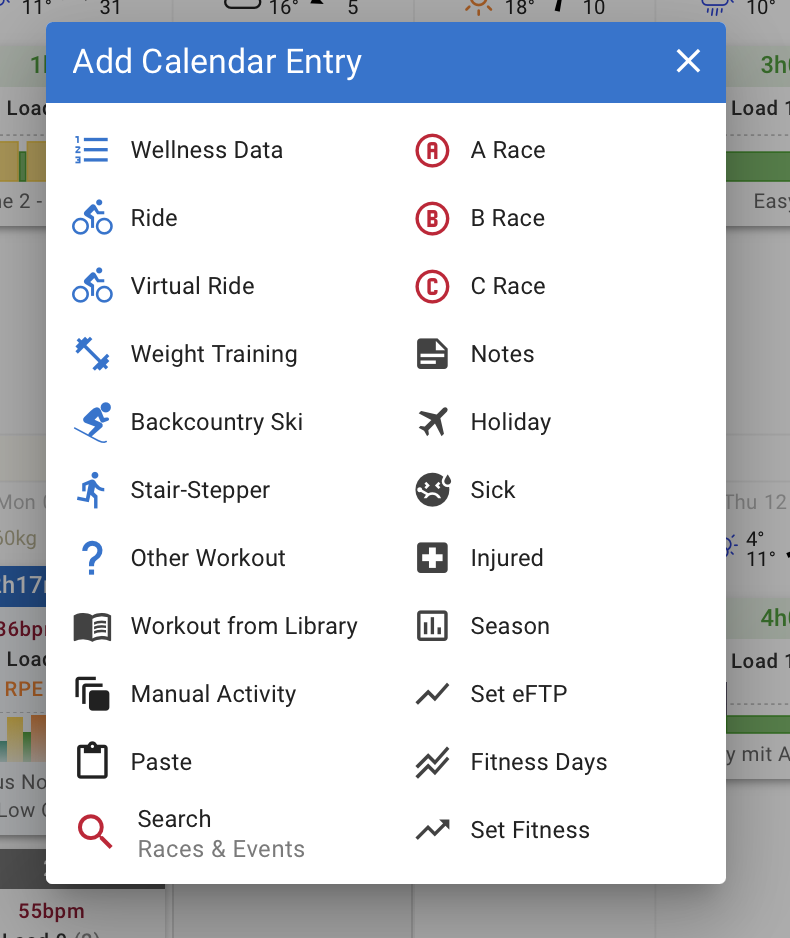
Log in to Intervals.icu and go to the Activities section in the main menu. This is where your training calendar is located.
Click on the day where you want to add a workout. Then choose the sport (such as cycling or running) to open the workout builder.
Step 2: Name your workout
Give the workout a clear and descriptive name.
Example:
4 × 5 min Threshold
Clear naming helps you organize sessions in your workout library and makes it easier to find them later.
3: Add the warm-up
Start by creating the first block of the session.
A typical warm-up example:
10 minutes at 65% FTP
Choose an easy endurance intensity. The goal of the warm-up is simply to prepare the body gradually and bring heart rate and oxygen demand up smoothly.
Step 4: Build the main set
The main set is where the primary training stimulus happens.
For a first workout, keep things simple. Add a block that repeats a work interval and a recovery interval.
Example structure:
5 minutes at 95% FTP
4 minutes recovery at 65% FTP
Repeat this block four times.
These threshold efforts are hard but sustainable. They typically sit around 95% of FTP, which targets the upper aerobic system and improves sustained power.
The recovery intervals allow partial regeneration while keeping the body moving.
The exact numbers are less important for the first workout. What matters most is that the structure is clear and easy to execute.
Step 5: Add the cool-down
Finish the workout with an easy block. Set the duration and choose a low intensity. A cool-down helps the body transition out of the session and supports recovery.
Example:
15 minutes at 65% FTP
Full workout overview
Warm-up
10 min ramp to 65%
Main set (4x)
5 min at 95% FTP
4 min at 65% FTP recovery
Cool-down
15 min ramp to 55%
Total duration: about 60 minutes.
Step 6 — Save the workout
Once all blocks are created, review the structure one final time. Make sure the durations, intensities, and repetitions are correct and that the workout name clearly reflects the session.
Click Save to store the workout in your library. From there, you can schedule it in your calendar, duplicate it for future sessions, or adjust it later if needed. Saving the workout ensures it becomes part of your structured training toolkit and can be reused whenever you want to repeat the session.
Pro tip: keep it simple
A common mistake when starting with workout builders is trying to create very complex sessions immediately. Too many short blocks, multiple targets, or complicated intensity instructions can make workouts harder to execute.
Start with clear and simple sessions that athletes can understand and perform well.
Once you are comfortable using the workout builder in Intervals.icu, you can gradually add more detail and variation.
Final take away
Simple workouts executed well are often more effective than complex workouts athletes struggle to follow.
The key idea behind structured workouts is simple:
- Build a clear structure
- Define the purpose of each block
- Adjust and refine sessions over time
Structured training does not need to be complicated to be effective. The key is clarity: define the purpose of the session, build simple blocks, and execute them consistently. Over time you can refine the details, adjust intensities, and build a library of workouts that support your training goals.
Once you become familiar with the workout builder, creating structured sessions in Intervals.icu becomes a fast and powerful way to guide training with intention rather than guesswork.
Do you want to learn more about using Intervals.icu to structure and analyze your training? Then explore the forum on the intervals.icu website, or start building your first workout straight away. The best way to understand structured training is simply to try it.
Are you looking for help structuring your training, interpreting your data, or building workouts tailored to your physiology, you can also explore my coaching and performance services at Level up Life, where I help athletes translate training science into practical performance.