Indoor vs. outdoor Training
Understand physics, ERG mode, motivation, and how to optimize your training for better performance.
Control vs Complexity
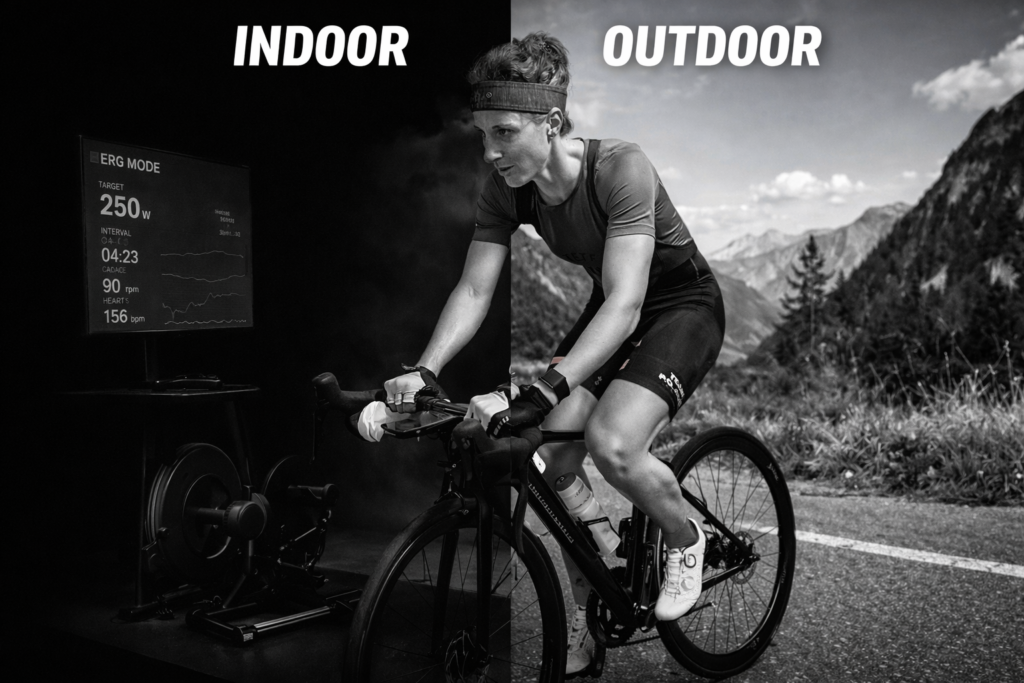
Indoor versus outdoor training is often framed as a choice. In reality, it is not. It is a continuum between control and complexity, and performance emerges from how well you move between the two.
Indoor Training = Precision
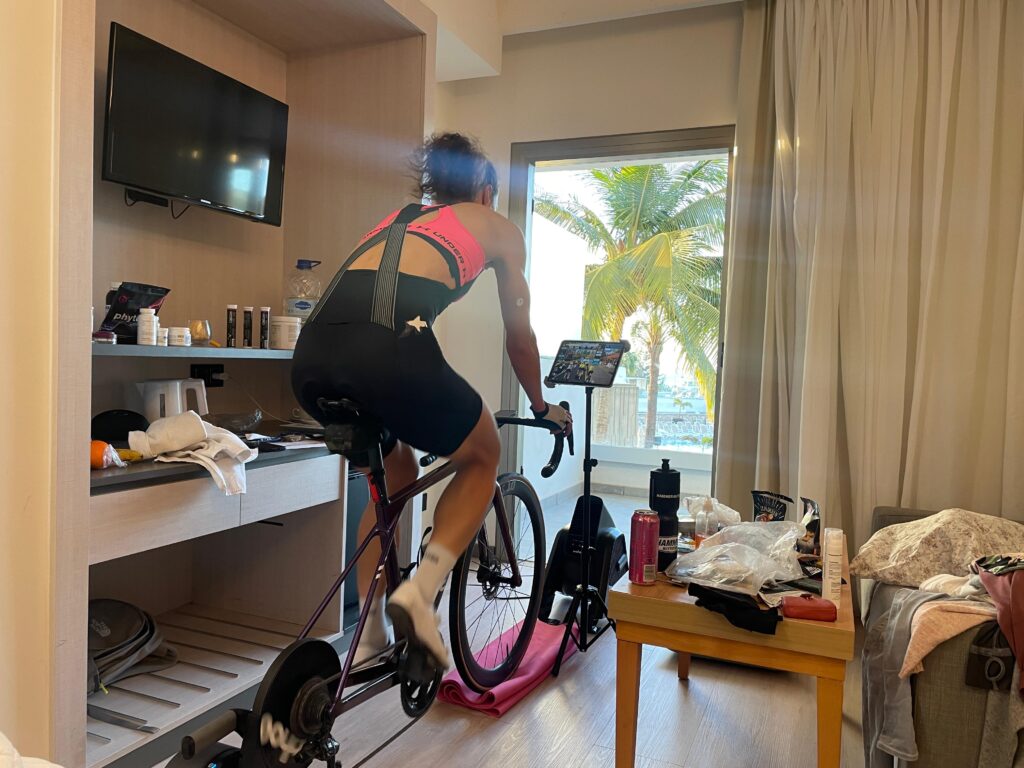
Indoor training creates an environment where variables are reduced to a minimum. There is no traffic, no external interruptions, and no unpredictability from the road. What remains is execution. You can hold exact intensities, repeat efforts with consistency, and create a very specific metabolic stimulus. Indoor training is therefore not just convenient, it is a tool for precision.
The Physics Behind Indoor Riding
From a physics perspective, indoor riding is more nuanced than it first appears. In virtual platforms, aerodynamic drag and gradient changes do exist, and the system simulates resistance based on these factors. However, what is fundamentally missing are the real-world dynamics created by body weight shifts, bike movement, and true inertia. The interaction between rider, bike, and environment is simplified.
ERG Mode = Pure Execution
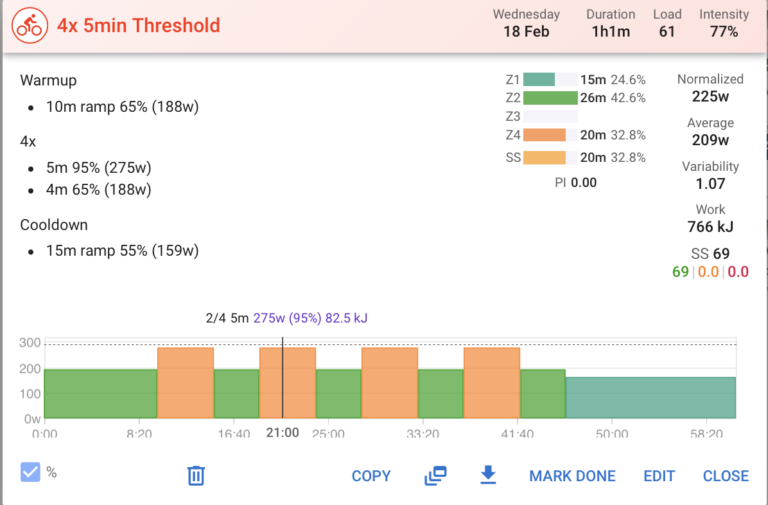
When you activate ERG mode, even these simulated dynamics become irrelevant. Resistance is fixed to a target wattage, independent of cadence or terrain, allowing you to focus entirely on hitting your prescribed power range without any external interference. This is where indoor training becomes highly effective for structured workouts.
Outdoor Training = Where Performance gets applied
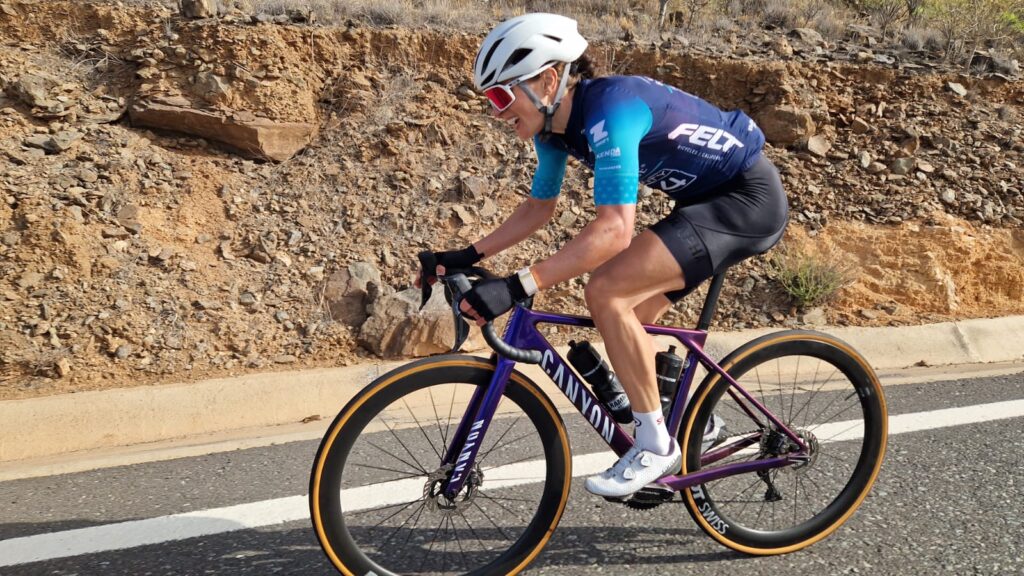
Outdoor training, in contrast, introduces real complexity. The terrain changes, wind resistance fluctuates, and your body constantly interacts with the bike and environment. Power output is influenced not only by physiology, but by positioning, timing, and movement. You are not just producing watts, you are managing them.
Different Load, Same Watts
This leads to a different type of stress. Indoors, pedaling is typically continuous, cooling is limited, and heat accumulates more quickly, which increases cardiovascular strain. Outdoors, airflow improves thermoregulation, and the variability in effort allows for brief recovery moments. As a result, indoor sessions often feel more controlled but also more taxing, while outdoor riding allows for higher peak outputs and more dynamic pacing.
Motivation and Perception Matter
An often overlooked factor in this comparison is motivation. Many athletes notice that their power output indoors is lower than outdoors, especially if they primarily ride outside. This is not only a physiological effect, but also a perceptual and neurological one. When you are used to outdoor riding, your body and brain are adapted to those dynamics, the changing environment, and the constant feedback. Moving indoors can initially feel harder, less engaging, and more demanding, which can reduce performance.
Adaptation to Indoor Training
However, this difference is not fixed. The more you train indoors, the more your system adapts to these conditions. Your perception of effort aligns, your neuromuscular patterns adjust, and over time the gap between indoor and outdoor performance diminishes. Eventually, your training zones become transferable across both environments.
In my case, there is no difference between indoor and outdoor power output.
Kathrin Fuhrer
Practical Adjustment for Athletes
If you are starting to integrate more indoor sessions and feel that your zones do not match, a simple and effective approach is to reduce your target power by around five to ten percent for indoor workouts. This allows your system to adapt progressively without forcing intensities that do not yet match your current perception and tolerance in that environment.
Mental Demands: Focus vs Awareness
There is also a difference in how each environment challenges the mind. Indoor training demands sustained focus and discipline in a controlled setting. Outdoor training requires awareness, decision-making, and constant adaptation. One develops internal control, the other develops responsiveness to external conditions.
The Biggest Mistake
The mistake many athletes make is treating both environments as interchangeable. They are not exactly. Indoor training is where you build capacity with precision. Outdoor training is where you express that capacity under real-world conditions.
Integration Creates Performance
The real value lies in combining both. Indoor sessions allow you to target specific systems with accuracy and consistency. Outdoor sessions challenge you to apply those adaptations in a dynamic environment. Together, they form a complete training system.
Perspective
From a Level Up Life perspective, this is not about choosing one over the other. It is about understanding that performance is built through both control and adaptability. Precision without variability is limited. Variability without structure is inconsistent.
Final Takeaway
In the end, you do not race in ERG mode. But you also do not build high-level performance without precision.
Want to optimize your training?
Discover how our P.E.A.K. Method supports your performance. Find out more here